Multi-Agent Drawing / Vibedrawing
In recent years, we often hear “Artificial Intelligence create a picture”… and most often this implies that some artist came up with a concept, a prompt engineer selected a prompt for this concept, and after several attempts, a generative neural network generated good-looking image. And although the image emerged from the depths of AI, in any case, the final result is the fruit of the joint creativity of a human and a machine.
This project explores the ratio of human and machine contribution to the final artwork, striving to shift more emphasis onto machine creativity, to justify the phrase “AI painted a picture” to the maximum extent. To achieve this, it is proposed to also entrust the work of developing concepts to AI, using a system of interacting natural language agents for this: a prompt engineer, an artist, and a curator.
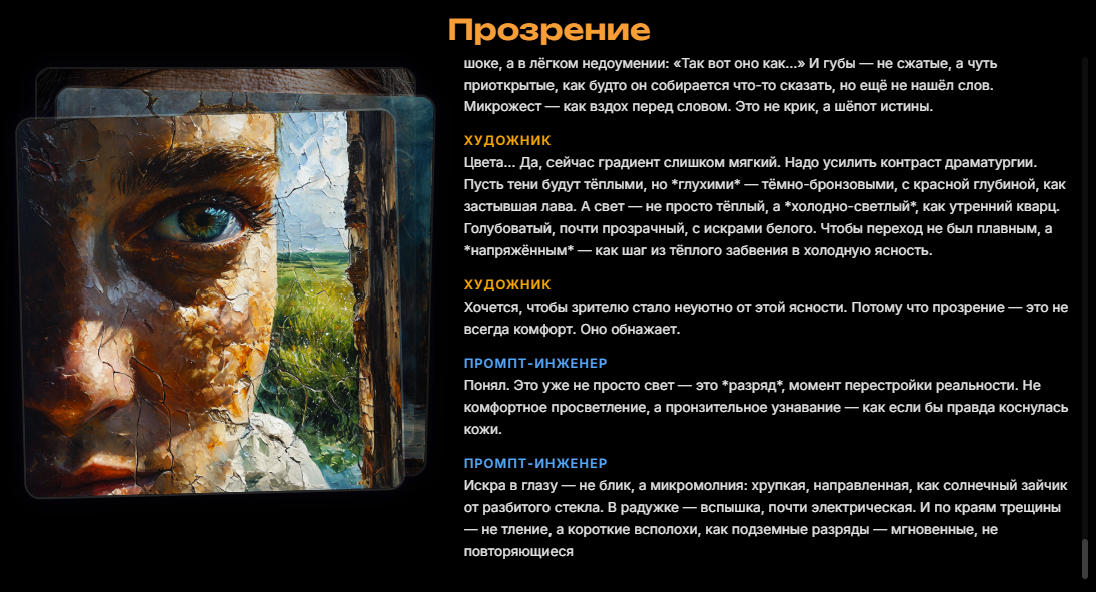
Explication
The work captures a shift in the very nature of artistic production, where the author ceases to be the sole source of the image and becomes an architect of the process. In “Multi-Agent Painting,” the initial impulse is extremely compressed; a single concept devoid of plot, composition, material, or intonation is fed as input. Then a multi-agent system kicks in, a collective of artificial interlocutors who begin to converse, argue, clarify, propose metaphors and visual solutions, i.e., they do what usually happens before an image appears—in the workshop, in the artist’s mind, among colleagues, in correspondence, in the critical environment. This pre-image stage here becomes the main content of the work and simultaneously its mechanism.
The work demonstrates that for AI, as for humans, meaning is not extracted from a concept directly; it is constructed through the friction of interpretations. A single algorithm tends towards averaging and stylistic automatism; it quickly finds an effective cliché and produces a recognizable picture. A multi-agent system, instead of a single gesture, offers polyphony, in which the concept is unpacked, overgrown with contexts, internal contradictions, and unexpected visual moves. It is precisely this collective intelligence, simultaneously rational and theatrical, that can approach what in the humanistic tradition was called the work of a concept—when an idea manifests not in a beautiful illustration but in the structure of the image, in its conflict, in its clarifying cruelty.
The application / screencast format emphasizes the fundamental openness of the “kitchen” and shifts attention from the result to the procedure. The viewer sees the magical birth of a picture, a chain of decisions where the discussion acts as a script, and the visual neural network acts as an executor and simultaneously as the next level of interpretation. The final step, when the system itself writes an explanation and evaluates the image for its correspondence to the concept, turns the work into a closed loop. The AI not only produces an image but also iteratively improves it and assigns it the language of exhibition discourse. Thus, the author reveals one of the key features of contemporary art: today, the expository reality is largely created not only by the object but also by its text, frame, description, and public argumentation.
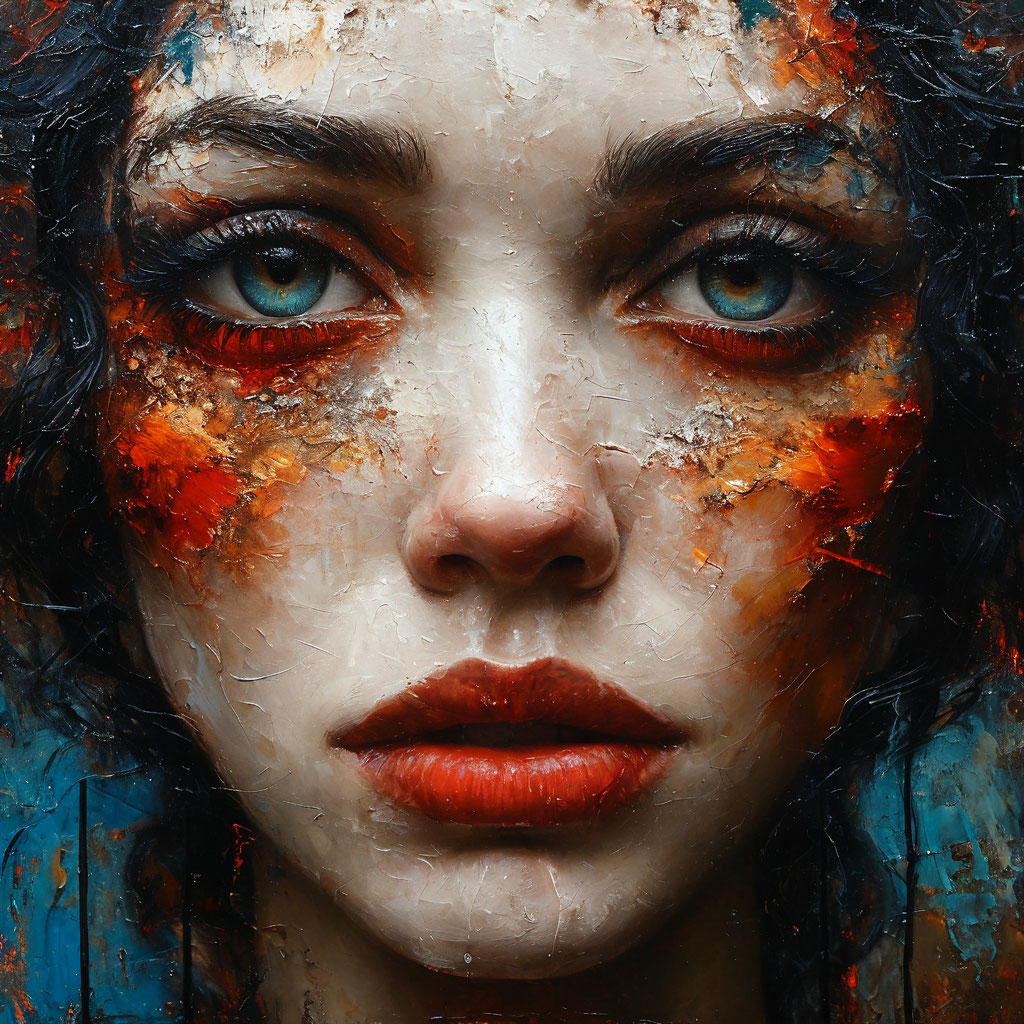 | 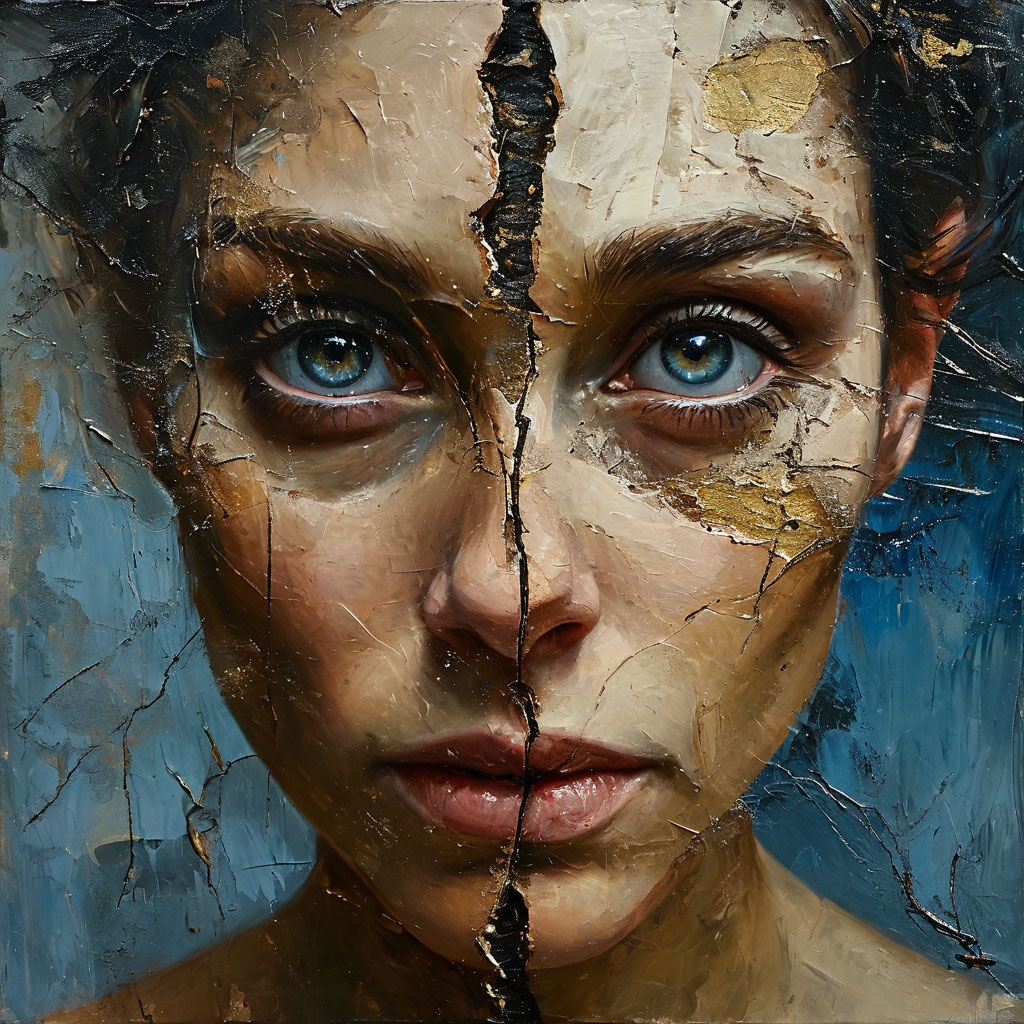 |
|---|---|
| Ambivalence, Yandex ART | Ambivalence, Multi-Agent Drawing |
An important effect of the experiment is not that “AI draws better,” but that a distributed system more accurately models the human way of understanding abstractions. Complex concepts, such as happiness, the meaning of life, or singularity, do not have a single correct image. They require an ensemble of optics, ethical reservations, aesthetic risk, and sometimes paradox. Multi-agency here acts as a technological form of criticism, which keeps the image from being too directly symbolized and forces it to work as a thought.
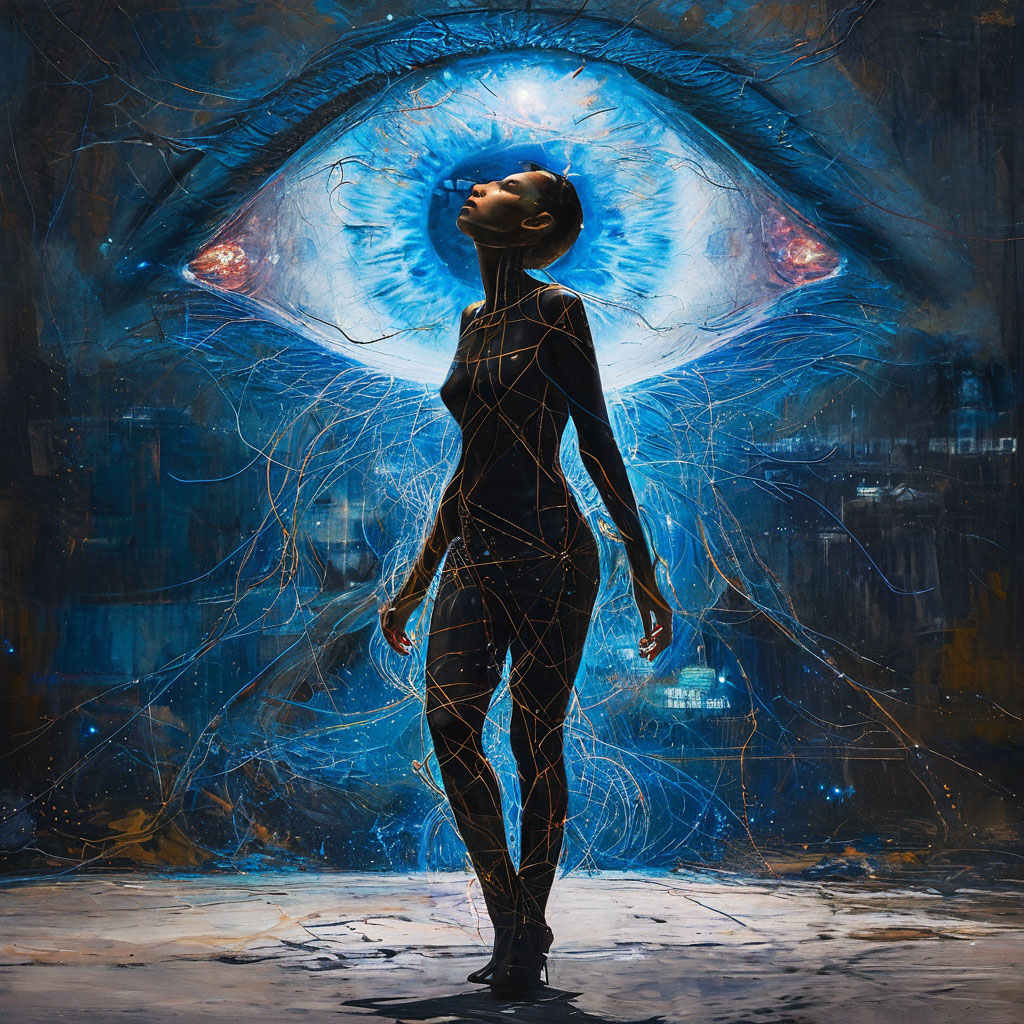
“Multi-Agent Painting” can be read as a curatorial gesture addressed not only to the topic of AI but to the institution of art as a whole. The author delegates almost everything to the machine except the main thing: they set the framework, choose the assembly principle, and define the protocol for the birth of meaning. As a result, the work becomes not a “picture created by AI,” but a statement about how artistic persuasiveness is produced today—through dialogue, through competing interpretations, through automated writing, through the algorithmic rehearsal of cultural roles. The work shows that the future of the artistic image may lie not in replacing the artist with a machine but in creating new collective subjects, where authorship transforms into the design of multiple voices, and aesthetics into an engineering discipline of meanings.
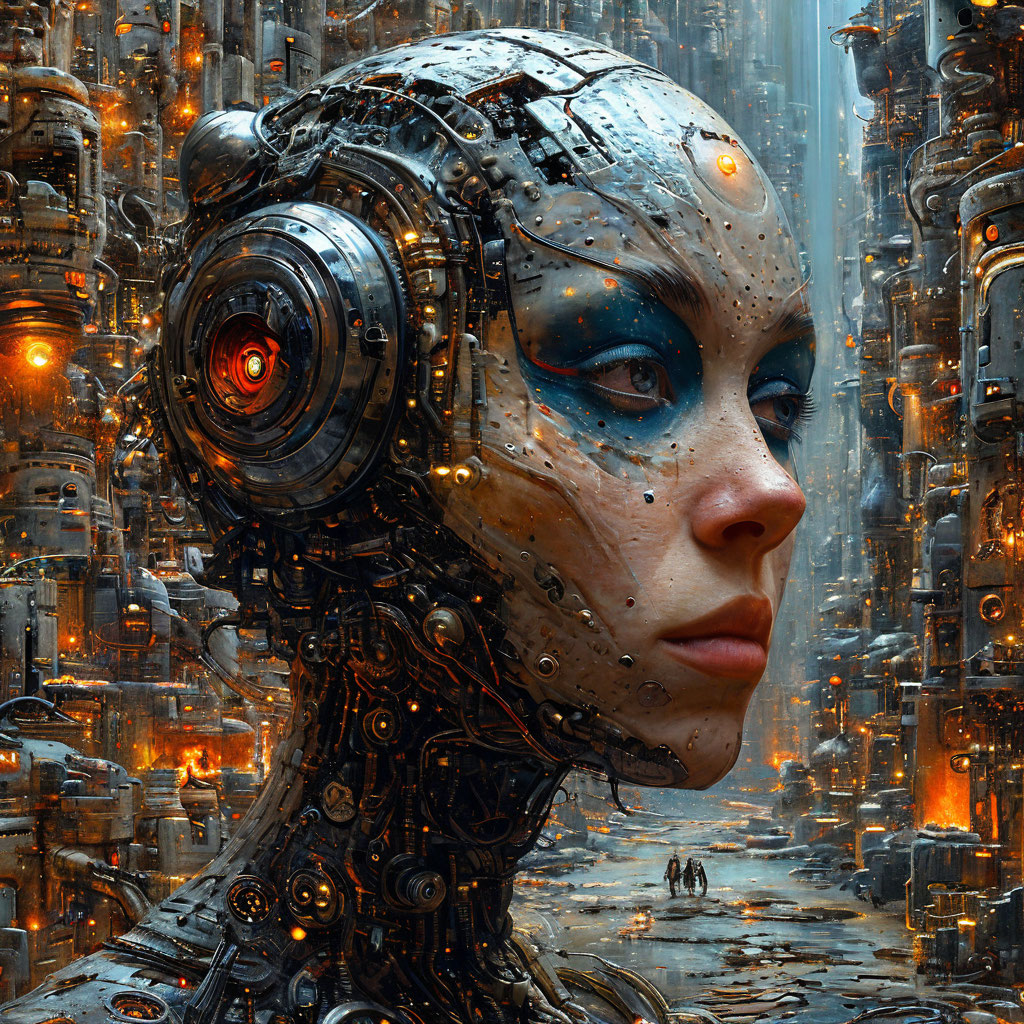 |  |
|---|---|
| Singularity, Yandex ART | Singularity, Multi-Agent Drawing |
Acknowledgements
The project was carried out as part of the “Neural Intensive” laboratory, organized by the Yandex Cloud Social Tech Center.
Technical Implementation
This work uses the following set of agents:
- Artist, whose task is to conceptualize the artistic image and specify the details of the work’s execution. Based on the Qwen3-235B model.
- Prompt Engineer, who is responsible for forming the prompt for the visual model, asks the artist for all the details, and debates with them. Also based on Qwen3.
- AI Generator - this is a generative model for images; in the current version, the YandexART model was used.
- Critic/Curator - looks directly at the image, determines how well it corresponds to the original concept, and forms a set of recommendations for improving the model.
The recommendations received from the critic are passed back into the dialogue between the artist and the prompt engineer, creating a closed feedback loop.
Here is an example of how the image on the theme of happiness was refined:
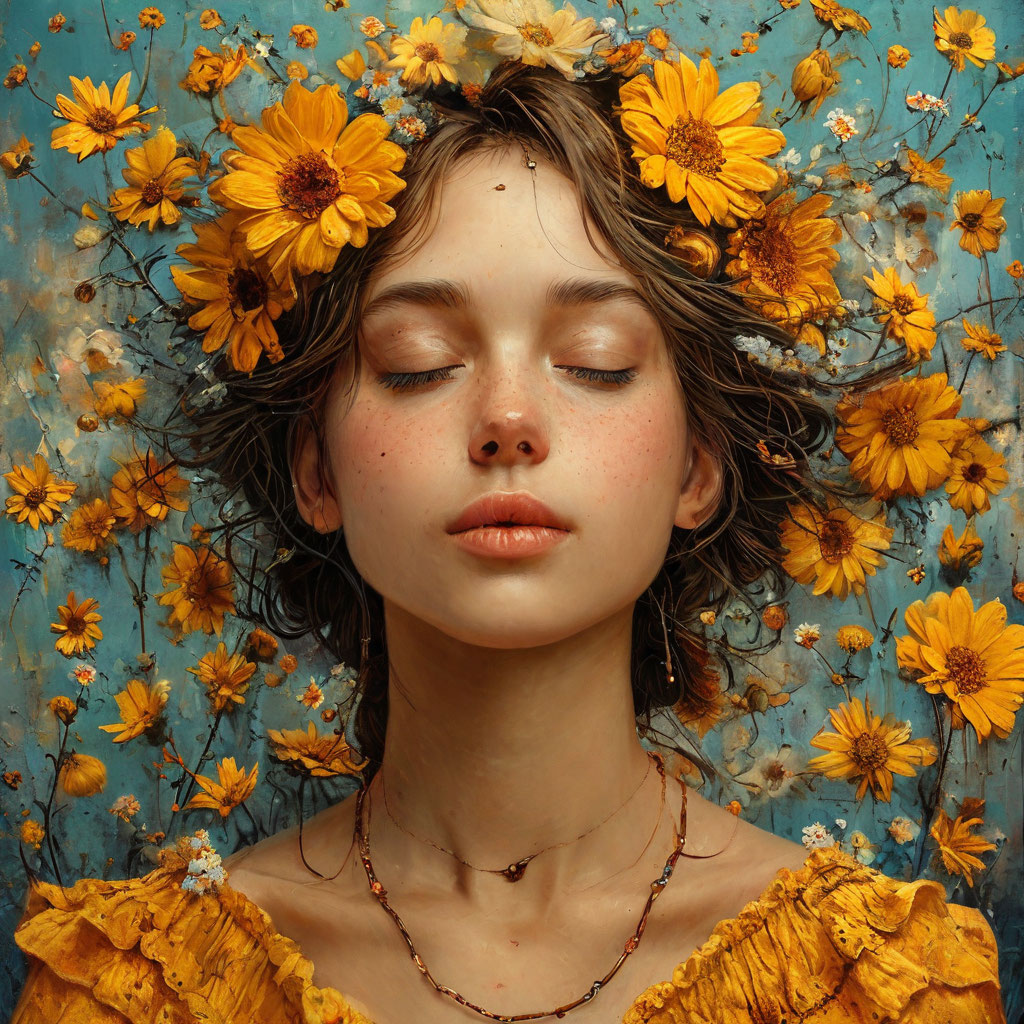 | 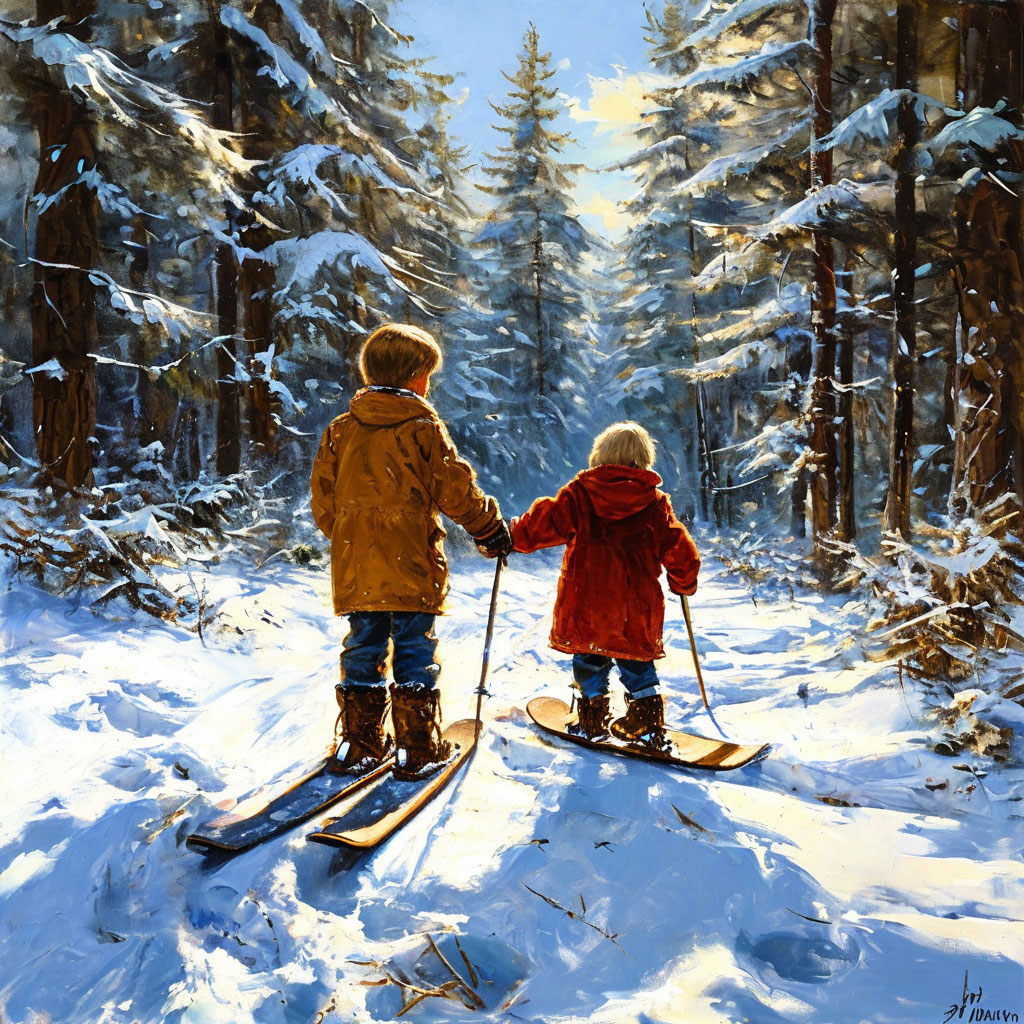 | 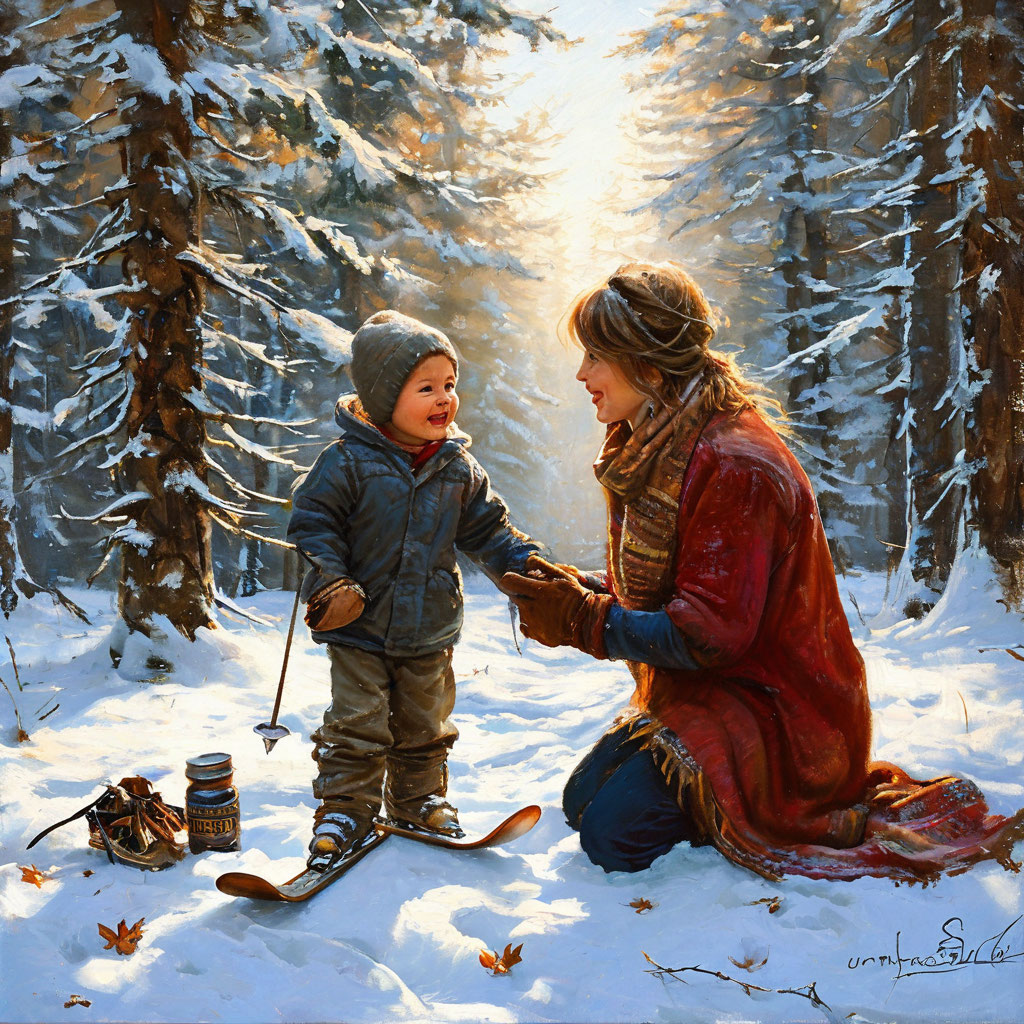 | 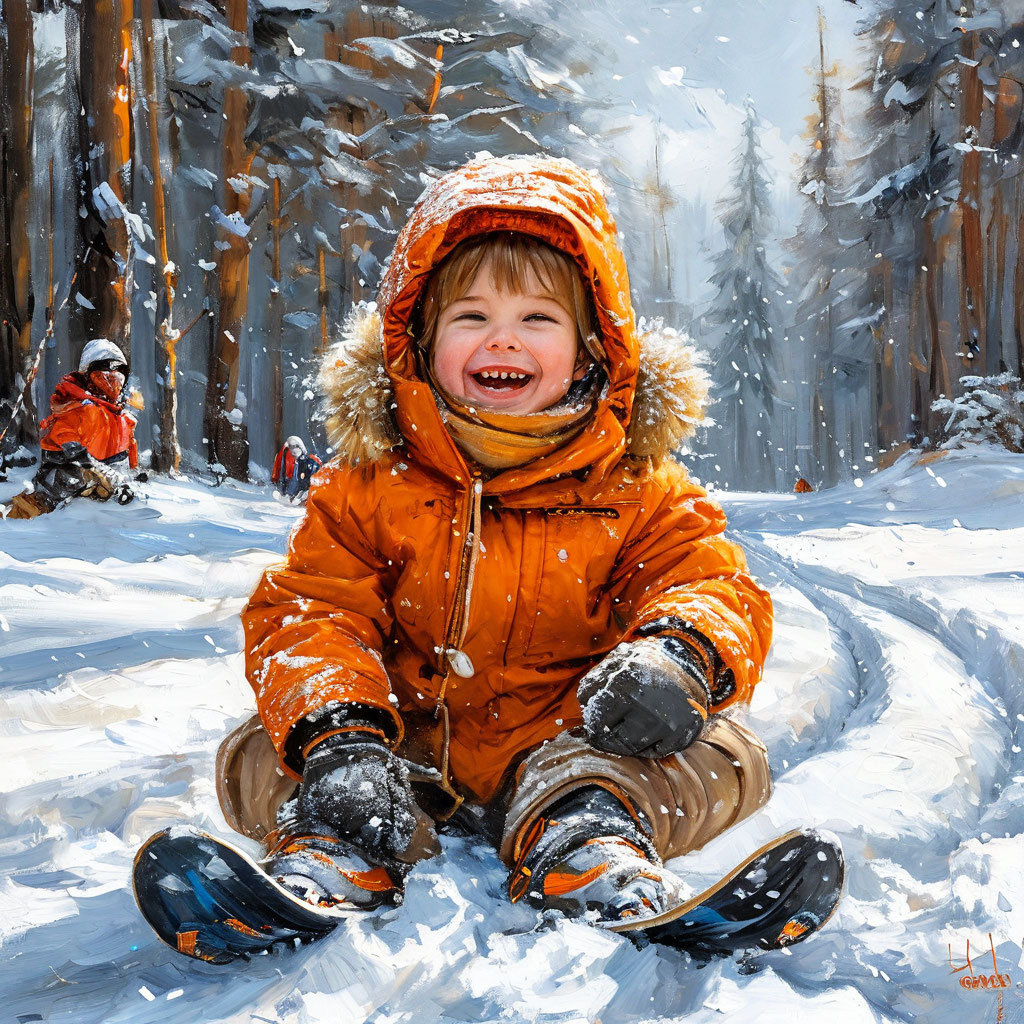 |
|---|---|---|---|
| Yandex ART | Generation 1 | Generation 2 | Generation 3 |
Exhibitions
- Exhibition Neural Intensive at Krasnokholmskaya Gallery, Moscow, January 28 — March 15, 2026.